Products and open source
Earshot
A self-hosted chat for teams, studios, clubs and families: public and private rooms, direct conversations, threads, and voice and video calls in the browser. One Python process, one SQLite file.
Why it matters to a client: a team tool with live updates, files and calls can be one Python process and one SQLite file on your own server, with no Node, no Redis, and no outside services.
Listening without being there
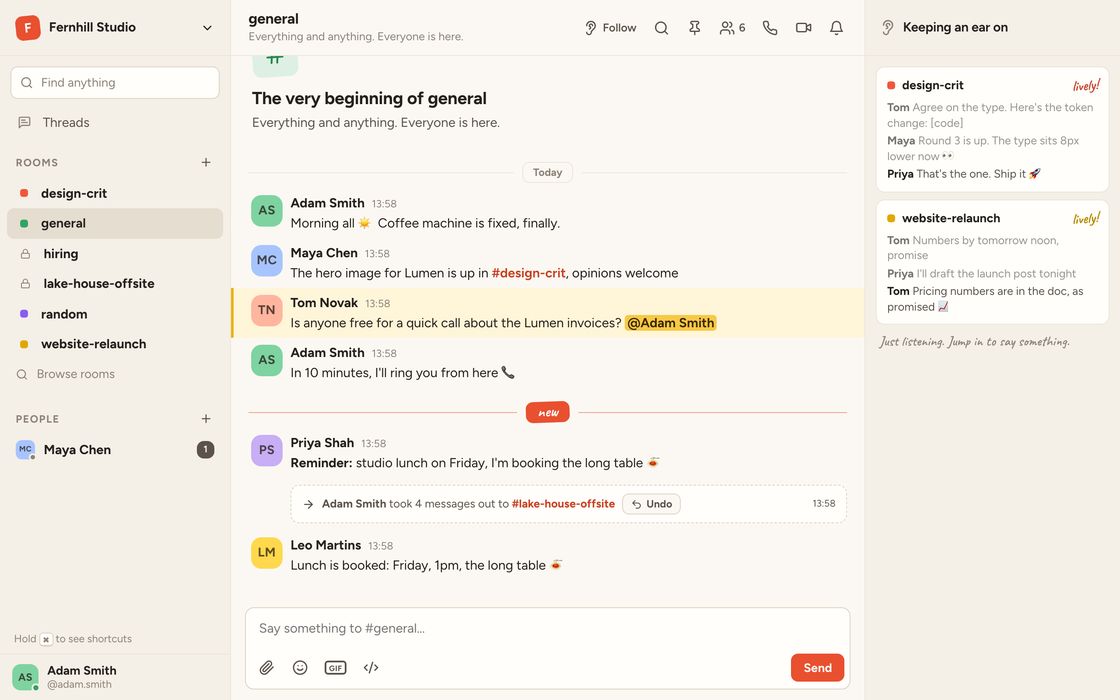
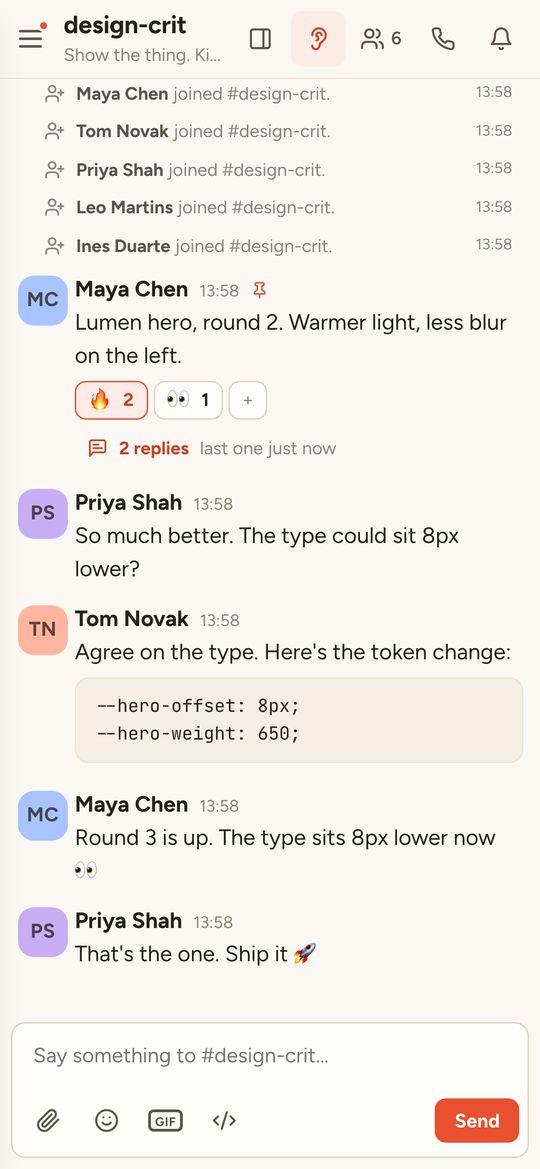
In most chats you open a room to see what happens in it. In Earshot you follow up to nine conversations. The rail on the right, “Keeping an ear on”, shows their latest lines as people write them, while you stay where you are. ⌘1 to ⌘9 jumps into one.
The film above is the real app: follow a room, go back to work, and its lines arrive in the rail.
Rooms, threads, and a way out
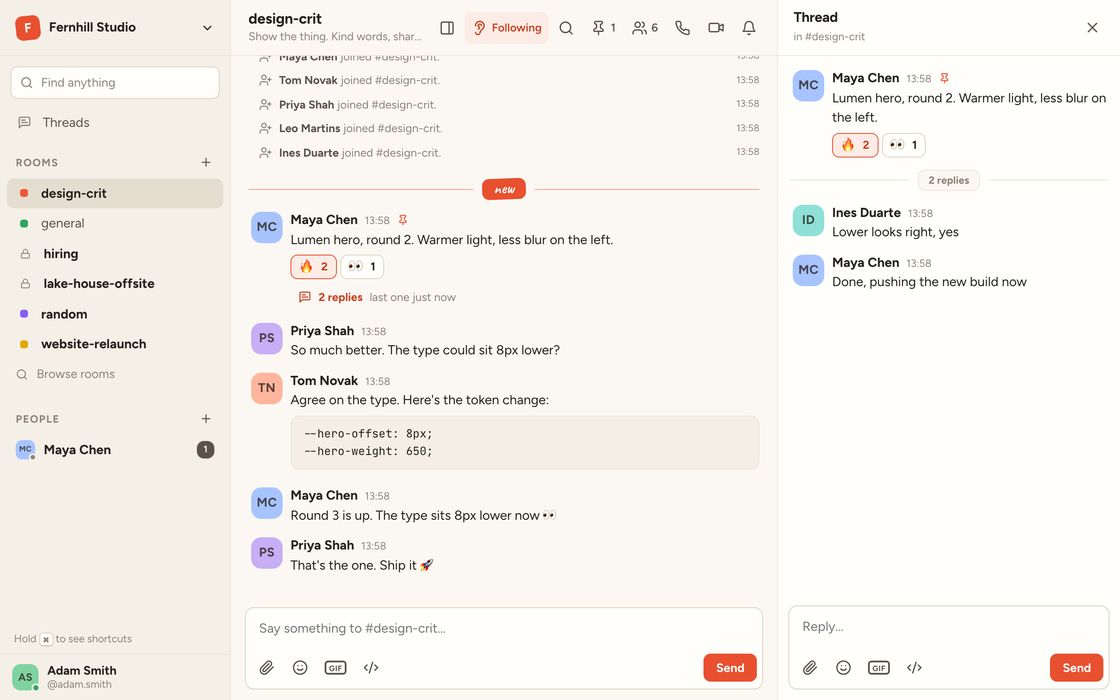
A room is public or private, and it can rest when its work is done. Direct conversations are for one person or a few. A thread opens beside the room, and the Threads page lists every thread you are in.
When a side topic takes over a room, you pick its messages and take them out into a new room. A note stays behind with a link, and Undo puts everything back.
The keyboard, quietly
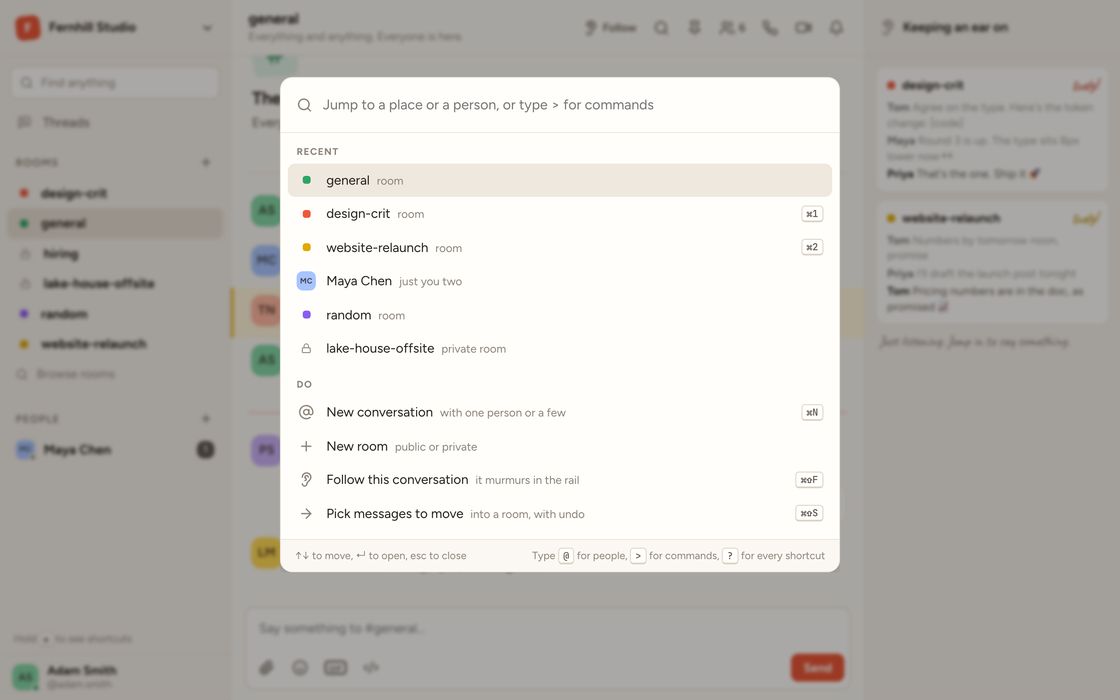
⌘K finds places, people and commands. Hold ⌘ and every button shows its key. The shortcuts stay out of the way until you ask for them.
Calls in the browser
Any place can start a voice or video call for up to 12 people, browser to browser over WebRTC. You see a preview before you join, and you can share a screen or raise a hand. A call in a direct conversation rings the others.
An admin sets the TURN servers for hard networks in Admin, with no restart.
Messages that stay on your server
Photos, video and files go to the server's own folder, and only signed-in people can open them. The first link in a message gets a preview card. The server reads that page, from public addresses only, and keeps its picture. So no reader's browser loads anything from the linked site.
A bot is a member with a token. It posts with one curl, and it can answer through a signed webhook when someone mentions it. A bot never hears another bot, so bots cannot loop.
Dark, and on a phone
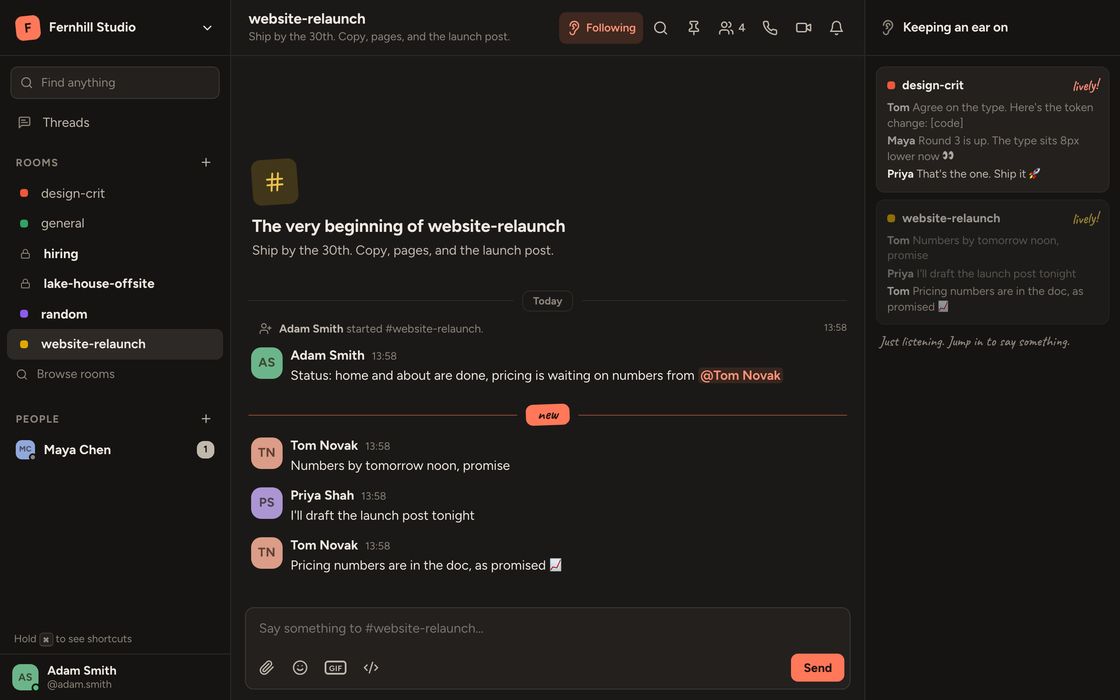
Earshot has a light and a dark theme. On a phone the sidebar is a drawer, a tap on a message opens its actions, and the app can go on the home screen. Push alerts reach it when no Earshot tab is open.
One process, one file
Every table is a document: an id and a JSON object in SQLite. What a query filters or sorts on is declared in code as a generated column with an index, and the app makes the database match at every start. A new field needs no migration.
Each page keeps one stream open. A new message is appended to the open tabs, and an edit or a reaction sends again only that message. Presence, typing and calls live in memory, in one process that can serve hundreds of people.
Want a tool built this way, for your team? Write to adam@bobowski.dev.