Products and open source
Philomena
A baby monitor from two phones. One phone stays with the baby and is the camera. Other phones watch it in the browser, over an encrypted call from phone to phone. Nobody installs an app.
Why it matters to a client: a live tool with video, sound and alerts can run in the browser, on your own server. Nobody waits for an app store, and nobody installs anything.
Two phones, no app
Many baby monitors are a camera, an app, and an account in someone else's cloud. Philomena needs two phones that a family already has, and a browser on each.
The camera phone opens the site and taps “Stays with the baby”. It shows a QR code and a 6-digit code. The other phone scans it, and the camera phone taps Allow. That is the whole setup. The camera keeps its code, so the phones find each other again the next night.
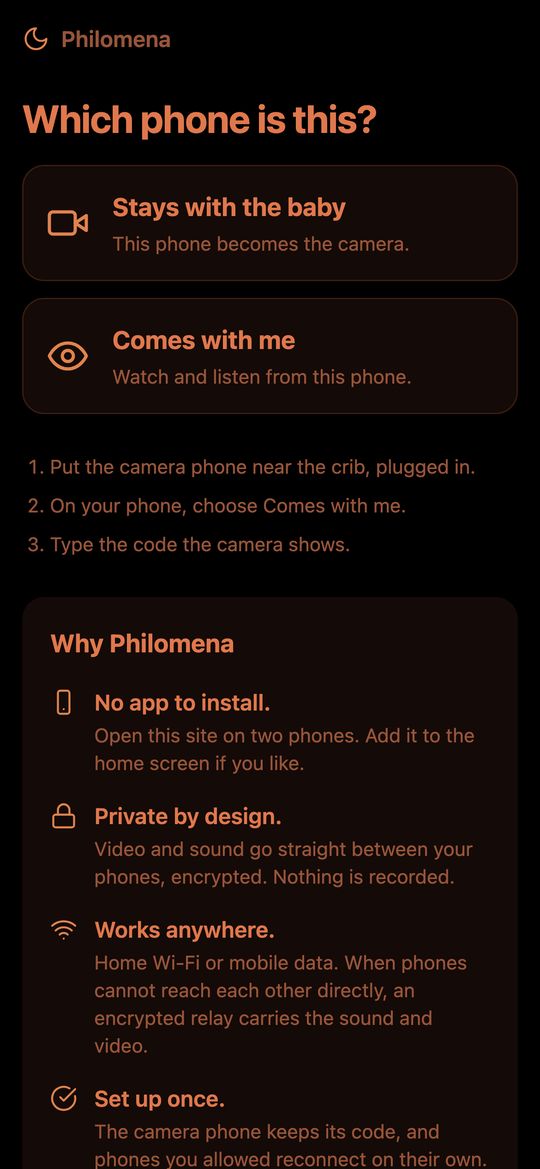
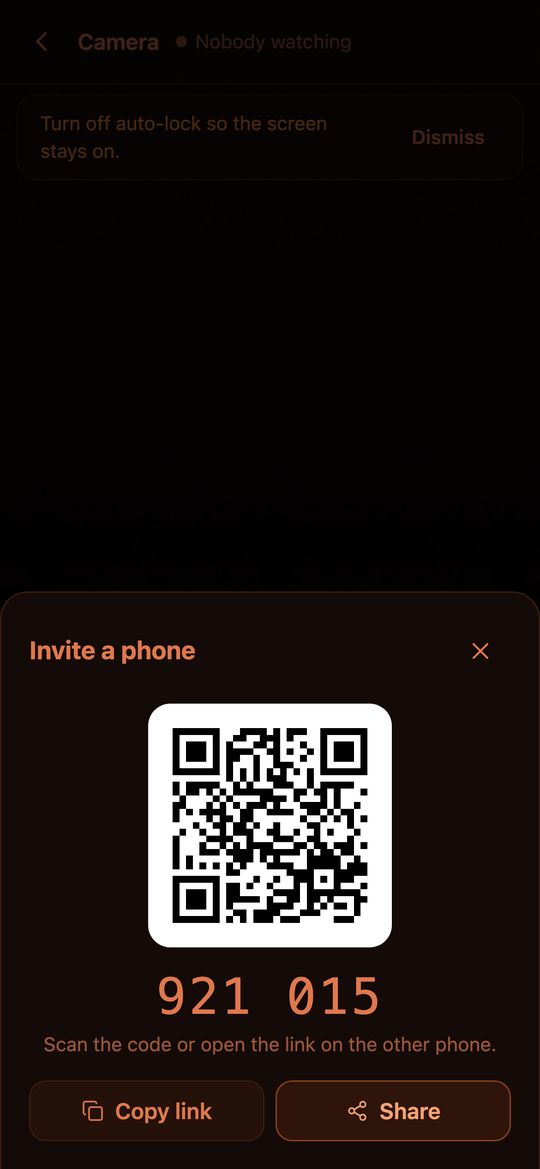
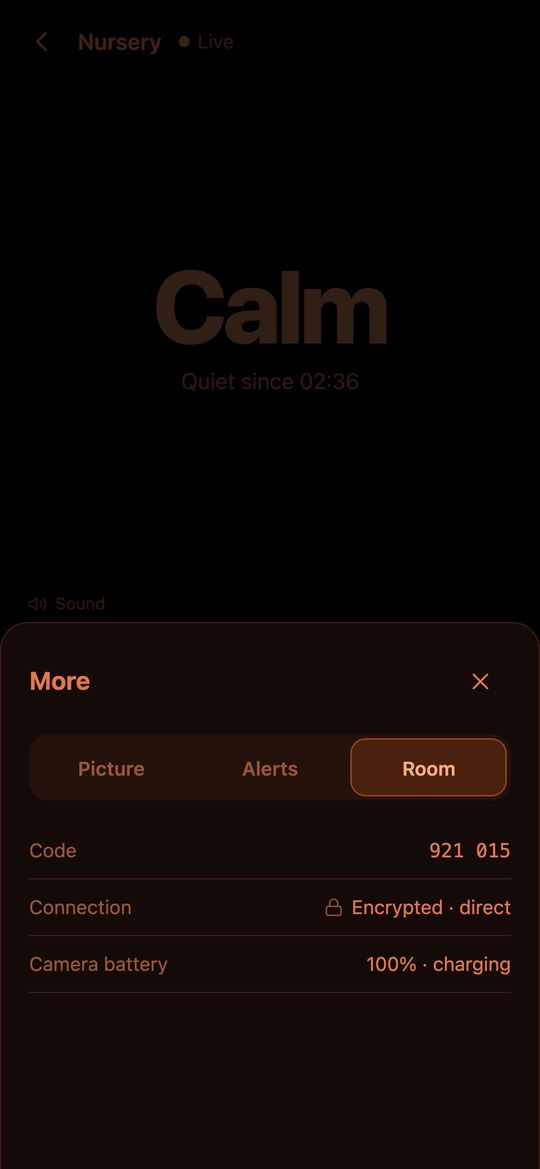
Phone to phone
The video and the sound go straight from phone to phone over WebRTC, encrypted end to end. Nothing is recorded. The server is only the meeting point: it serves the pages, passes the handshake between the phones, keeps the approvals, and sends the push alerts. A call that is already connected keeps running when the server restarts.
Stario has no WebSocket, so the handshake travels as Server-Sent Events and POST requests. When two phones cannot reach each other directly, for example a phone on mobile data, a coturn relay carries the media. The relay sees only encrypted packets.
One word at 3 a.m.
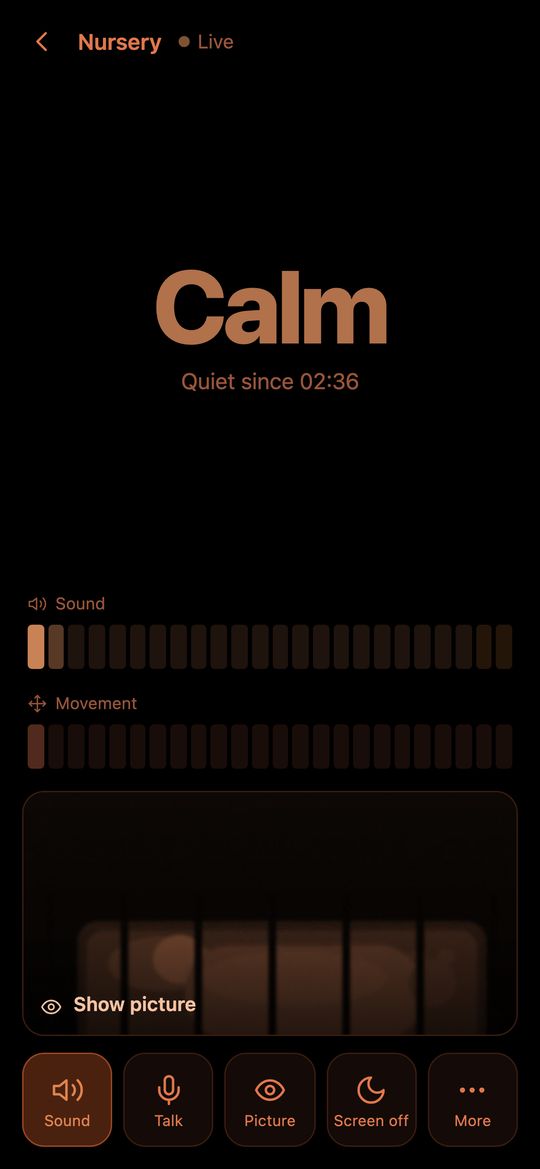
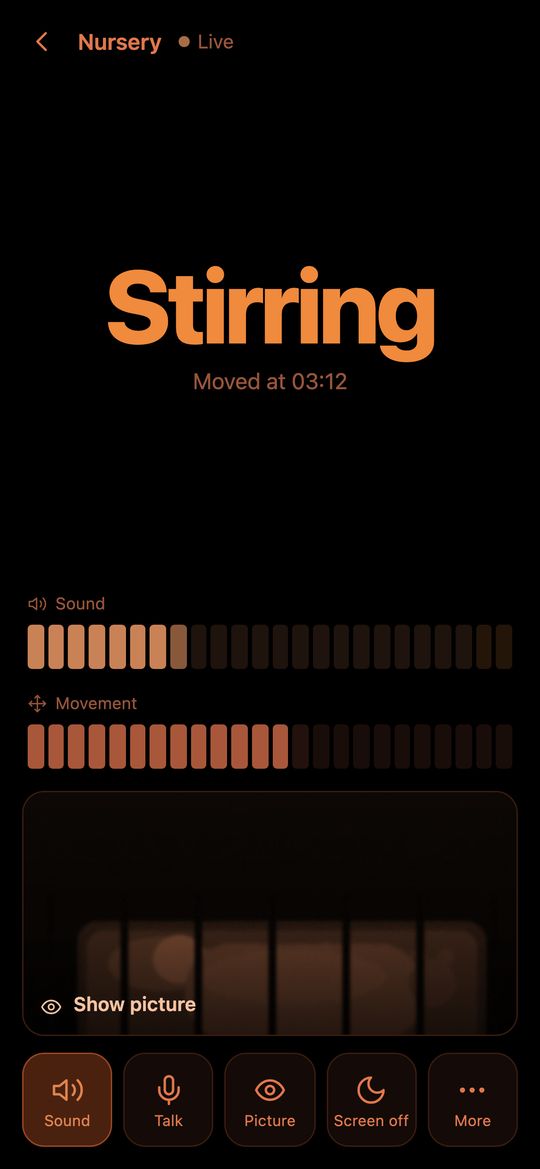
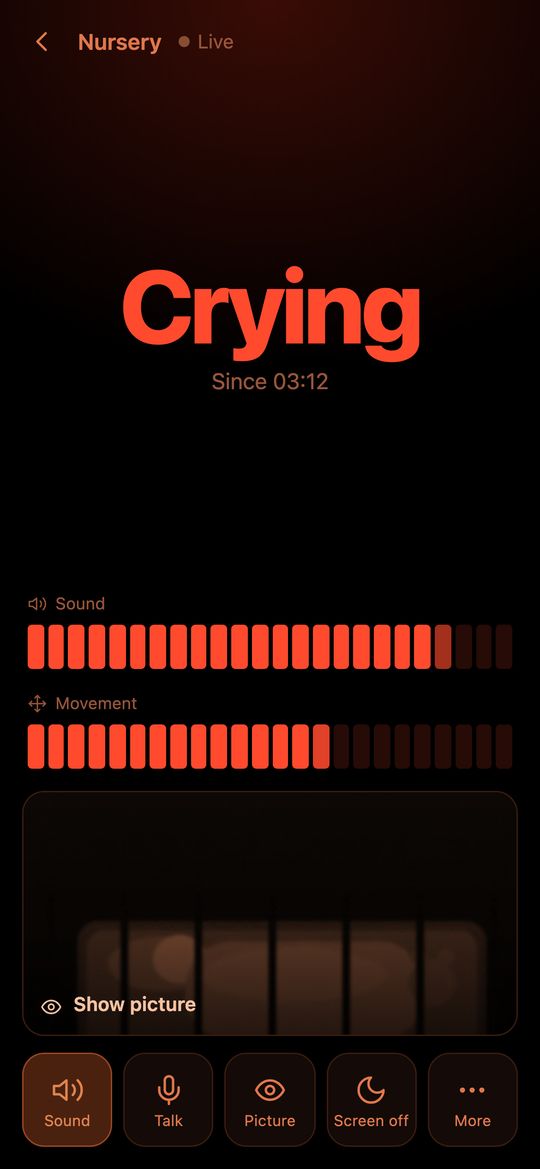
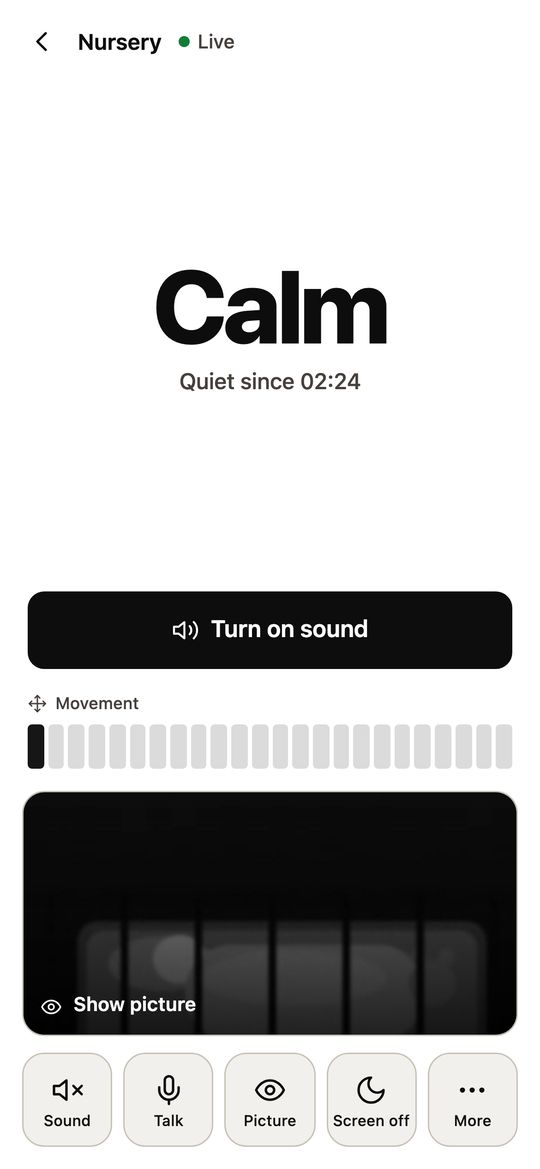
A parent looks at the viewer half awake, often with a baby on the other arm. So the viewer opens on one word, Calm, Stirring or Crying, as large as the screen allows, with one line under it. Two wide meters show the sound and the movement.
The camera phone listens and watches, and sends events: a cry, a stir, a loud sound, movement. A cry holds “Crying” for two and a half minutes, and the others hold “Stirring” for one minute, so the word does not flicker.
Dark by care
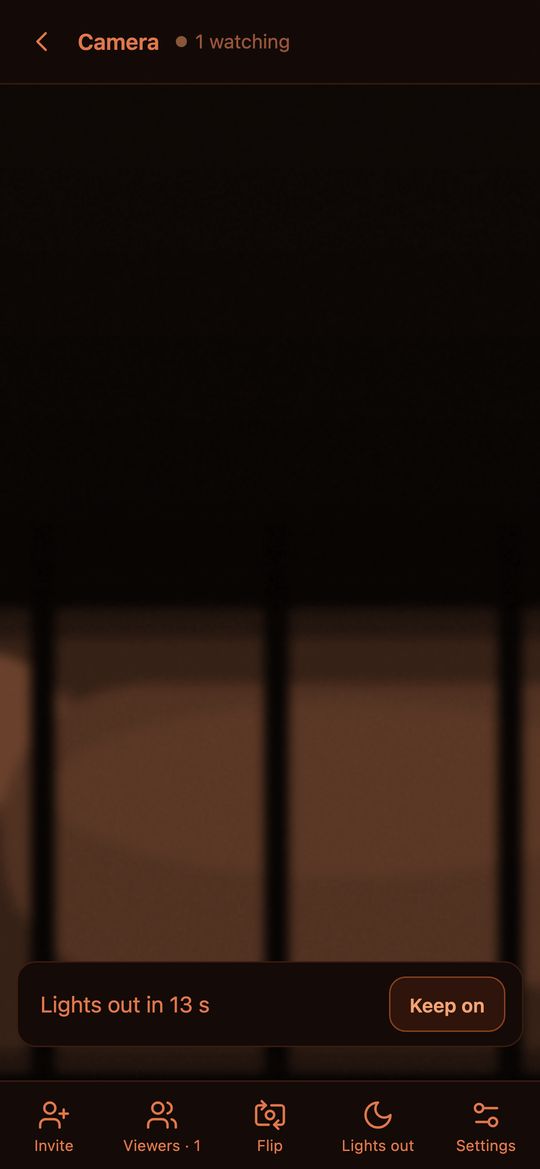
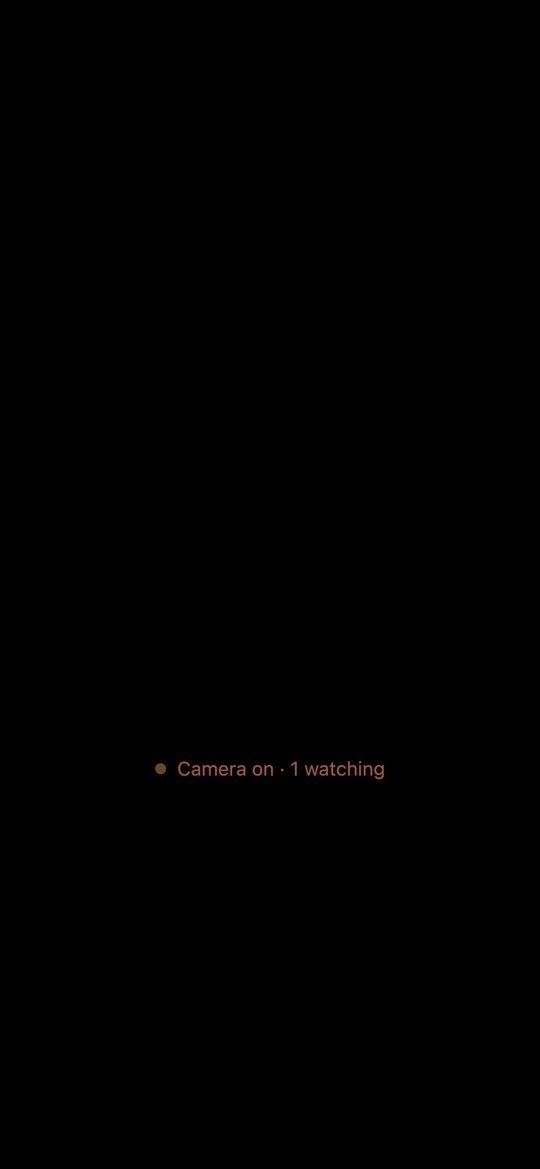
The light of the camera phone can wake the baby, and a bright viewer hurts tired eyes. The night look is black, with only red and amber, the light that disturbs night vision least. The camera turns its own screen off once someone watches.
In a bright room or in the sun, the day look is black on white. Auto follows the light or dark setting of the phone.
Light on battery and data
The camera measures motion in its own preview. It sends 24 frames a second while the baby moves, 6 after ten calm seconds, and 2 after a still minute. Grain in a dark room does not count as motion.
A viewer that is not looking, with the screen off or with the sound only, gets no video at all. The sound always stays at full quality.
Alerts on a locked phone
A phone browser can stop the sound when the phone locks. So the camera also sends its events to the server, and the server sends a Web Push alert to each viewer, with a cooldown for each kind. When the camera is silent for a minute, the viewers get a “camera offline” alert.
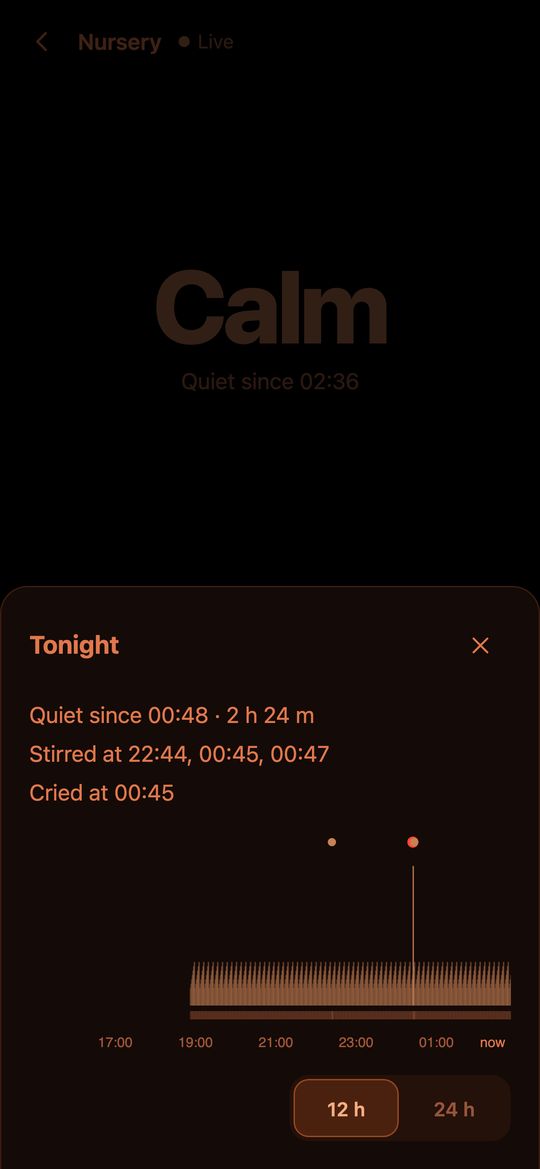
The night history stays on the camera phone. The viewer asks for it and draws Tonight: when it was quiet, when the baby stirred, and when the baby cried.
Your own server
Philomena runs on your own server, under your own domain. Yard deploys it from a git push, as two services of one compose file: the app and coturn. The server keeps only the rooms, the approved phones, and the push subscriptions, in SQLite.
Want a tool built this way, for your team? Write to adam@bobowski.dev.